
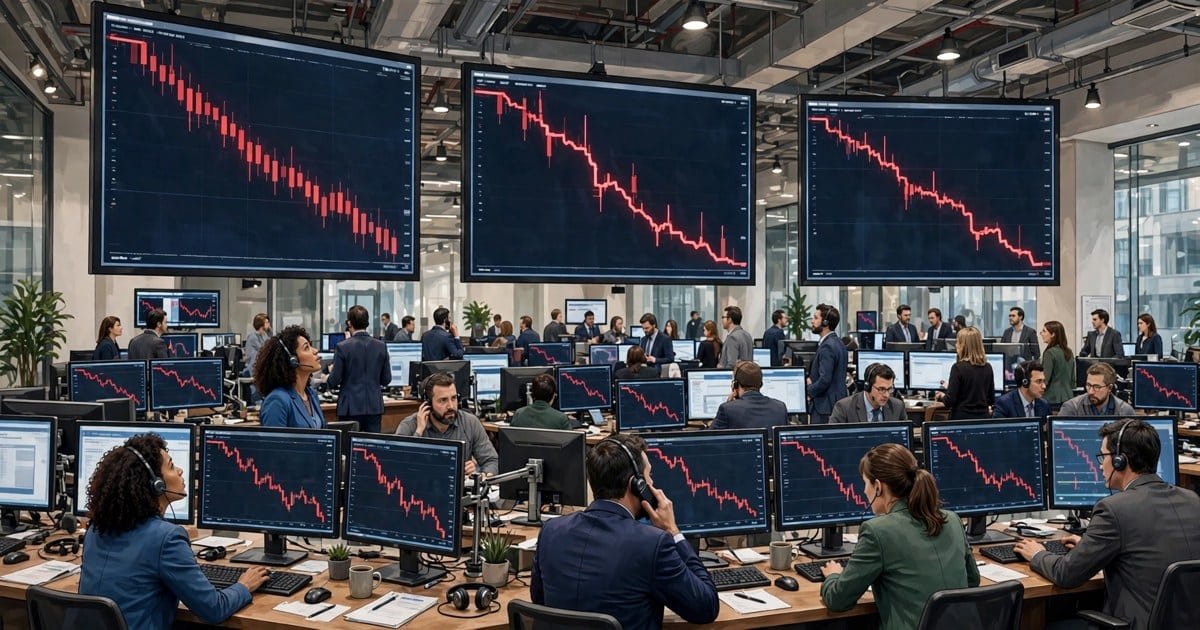
Note: The image above is an original designed graphic, not a photo of the actual event.
On Friday 30 Oct 2026, the PSX benchmark KSE-100 fell 784.19 points, or 0.47%, to close at 166,409.25, ending a four-session rally, after a previous close of 167,193.44.
Trading volume was 825.47 million shares, but traded value fell 26.69% to Rs23.12 billion, and market capitalisation fell to Rs18.389 trillion.
The biggest drags were UBL, Lucky Cement, HBL, Fatima Fertiliser and Attock Refinery, together wiping off 359 points, with profit-taking, rising oil prices and Strait of Hormuz tensions cited; the index was also down 2.09% for October as a whole.
Sources: Dawn, The Express Tribune, Business Recorder, The Nation (30-31 Oct 2026).
How the Friday decline fits into the wider market
The 30 October session ended with the KSE-100 at 166,409.25, approximately 0.47 percent below its previous close. The index nevertheless finished the week above its level on 23 October. Comparing those two Friday closes shows a gain of roughly 2.48 percent over the week, even though the final session interrupted four consecutive advances.
That distinction matters for readers following the market: a daily loss does not necessarily mean the entire week was negative. The KSE-100 measures the performance of a selected group of listed companies, and movements in heavily weighted shares can have a disproportionate effect on the headline number.
Market breadth and trading activity
The session also showed weakness beyond the benchmark. ARY News reported 173 advancing companies and 300 declining companies in the ready market, with 28 unchanged. The larger number of falling shares suggests that the selling was not limited to one or two companies. However, individual stocks still moved in different directions.
Trading volume and traded value measure different things. Volume counts shares exchanged, while value measures the money involved in those transactions. A day with more shares traded can still produce lower turnover in rupee terms if activity shifts towards lower-priced securities.
What investors can monitor next
The next sessions will help show whether the decline was a temporary interruption or the beginning of broader weakness. Company earnings, interest-rate expectations, exchange-rate movements and economic policy announcements can influence market sentiment. These factors should be assessed alongside company-specific fundamentals rather than used to explain every daily move automatically.
For long-term investors, the important comparison is between the market price and the underlying business’s earnings, debt and cash generation. A one-day index movement is a market snapshot, not a recommendation to buy or sell any security.