
Defence Minister Khawaja Asif has said that consultations on the creation of new provinces in Pakistan are moving towards consensus, and that the process could take shape before the end of the year.
Speaking on Geo News on Sunday, Asif said the discussions had been under way for several weeks and were now “moving towards culmination”. He said he believed it would not take long to reach an agreement, adding that the country’s political landscape would change in a progressive way if a consensus was built and new provinces were created.
“The new year will see the new system, God-willing,” the minister said, adding that the process would “take some shape in 2026”.
Asif was careful to stress that he was offering his personal assessment. He said he had no inside information on the discussions and that, even if he did, he could not disclose it on a television show. He also declined to say how the process would culminate, or whether there would be a referendum or a vote in the National Assembly, cautioning that such a discussion could create “complications”.
High-level meetings
The minister’s remarks follow two recent high-level meetings involving the president. Interior Minister Mohsin Naqvi called on President Asif Ali Zardari on Thursday night, and the president subsequently met Prime Minister Shehbaz Sharif on Saturday.
Official sources told Dawn that both leaders had agreed to “strictly adhere to constitutional provisions” governing the creation of new provinces or administrative units. The PML-N has so far refrained from articulating a formal policy on the matter until it comes before parliament.
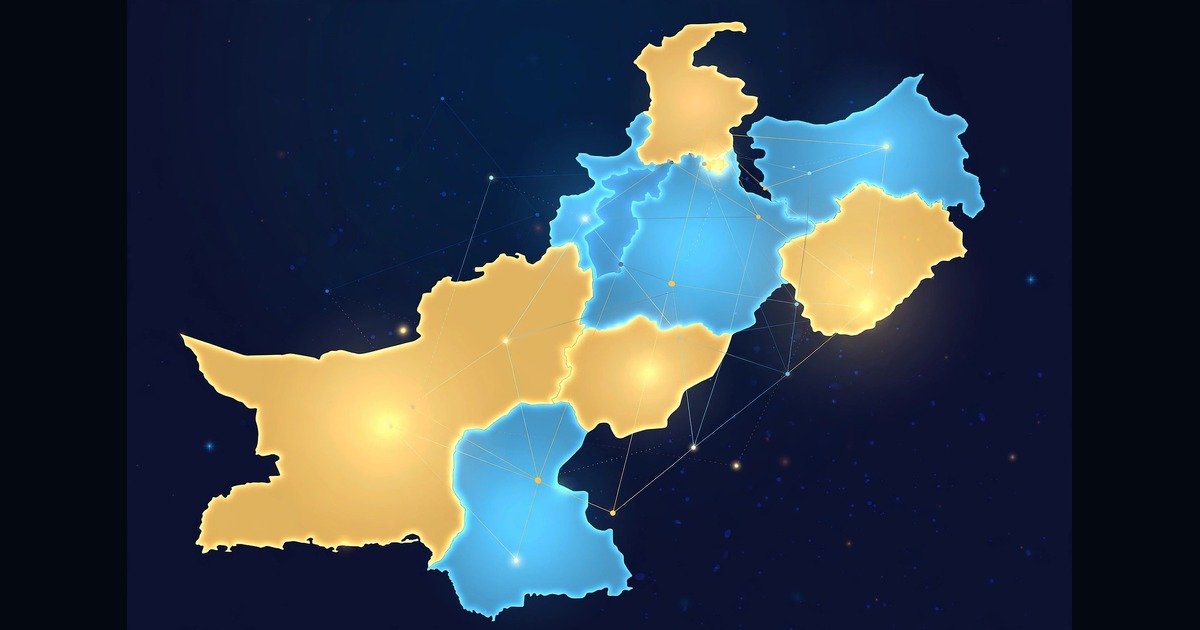
Asif has previously argued that Pakistan could have as many as 12 provinces if the exercise was guided by administrative requirements rather than linguistic, ethnic or political considerations. The News has reported a proposal to reorganise the country into 12 provinces — Punjab into four, Khyber Pakhtunkhwa and Balochistan into three each, and Sindh into two. No final decision has been taken on boundaries, structures or process.
What stands in the way
Creating new provinces is not a simple administrative step. Under Article 239(4) of the Constitution, altering provincial boundaries requires a two-thirds majority in both houses of Parliament, as well as a two-thirds majority in the affected provincial assembly — a high threshold.
The politics are also uneven. The PPP has shown no sign of softening its position on Sindh, where it cites a unanimous Sindh Assembly resolution opposing the province’s division, although it has said it backs new provinces elsewhere if people want them. Asif insisted that no political party would have the decision forced upon it and that parties would be given room to reach consensus.
MQM-P leader Mustafa Kamal has said a referendum would be held and called December a crucial month, while ministers from the PML-N and the PPP have said earlier that a referendum alone cannot create new provinces.
Asif also regretted that the changes concerning local governments envisaged under the 18th Amendment had not been implemented. The Election Commission recently halted preparations for local government elections in Khyber Pakhtunkhwa until further orders, a separate development that underlines how unsettled the country’s local-governance picture remains. (Read: ECP halts KP local government elections)
Why it matters
The debate over new provinces has gathered pace in recent weeks, with senior PML-N figures publicly supporting smaller administrative units to improve service delivery and reduce the concentration of power and financial authority in Lahore, Karachi, Peshawar and Quetta. In September, Planning Minister Ahsan Iqbal called for a national debate on governance reform, proposing either 12 to 15 new provinces or 160 empowered district governments.
For now, though, Asif’s own words are the limit of what is confirmed: consultations are under way, he believes consensus is near, and he expects the new system to take some shape in the new year. Until a formal proposal reaches parliament, the creation of new provinces remains a debate — not a decision.
Related: Shehbaz Sharif, Asim Munir top 500 most influential Muslims list
Sources: Dawn, Express Tribune, Pakistan Today, Thursday Times.
Note: This article’s featured image is an AI-generated illustration created for this story.